
Introduction
Paying for university is one of the biggest worries facing South African learners and their families. Tuition, accommodation, textbooks, transport and food add up quickly, and many talented students never reach their potential because the money isn’t there. A full bursary from an established mining company can remove that barrier. It can also give you a head start in a career that many people only reach after years of searching.
This guide covers everything you should know before applying for the Rio Tinto / Richards Bay Minerals (RBM) bursary: what the programme is, who the sponsor is, which fields are funded, who qualifies, what to prepare, how to apply step by step, how to write a strong motivational letter, what to do after you submit, and how to avoid common mistakes and scams. Read it from start to finish, then use the checklist near the end.
Quick facts at a glance
- Sponsor: Rio Tinto / Richards Bay Minerals (RBM), KwaZulu-Natal
- Open to: South African citizens (mainly Grade 12 learners; some listings include students who have finished first year)
- Official application portal: https://jobs.riotinto.com
- Latest closing date I found: 26 October 2026, listed on a third-party bursary directory. Always confirm this on the official portal.
- Cost to apply: free. Never pay anyone for a bursary application.
Direct link to apply
Apply here: https://jobs.riotinto.com
Create a candidate profile, then search for “bursary” or “RBM” to find the open listing. Apply only through this official Rio Tinto site.
Deadline warning: Rio Tinto intakes have closed at very different times. One cycle closed on 24 January 2025, while another listing showed a closing date of 31 August 2025. Dates change between years and between listings, so check the official page today. If the 26 October 2026 date is correct, you have only a few days left.
About Richards Bay Minerals (RBM)
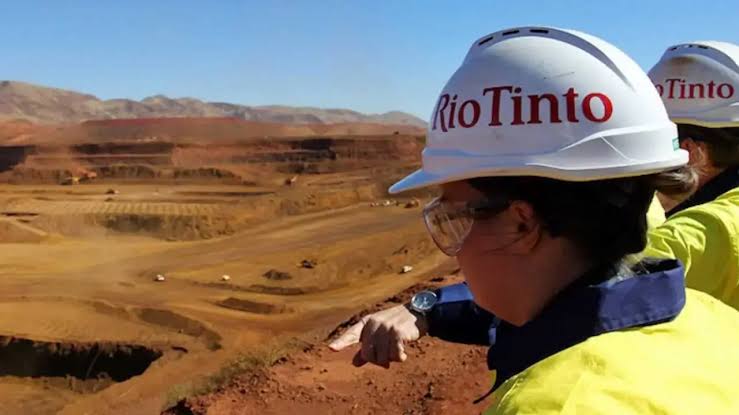
RBM was founded in 1976 and is a subsidiary of the Rio Tinto Group in South Africa. Rio Tinto holds 74%, Blue Horizon Investments holds 24%, and permanent employees hold the remaining 2%. The company is a recognised leader in sand mining and mineral processing and one of the world’s foremost producers of titanium minerals, high purity pig iron and zircon.
It operates near Richards Bay on the KwaZulu-Natal coast, where titanium dioxide is produced from mineral sand deposits in the mineral-rich dunes.
Rio Tinto is a global mining group. Working for the group can open doors well beyond one site, because large mining companies hire graduates for projects, plants, laboratories and offices in many countries. That is why a bursary from a company like this is worth far more than the money alone.
What is a bursary, and how is it different from a scholarship?
People often use “bursary” and “scholarship” as if they mean the same thing, but there is a difference in South Africa:
- Bursary: funding for your studies, often tied to financial need and academic potential. Many corporate bursaries come with a work-back obligation, meaning you work for the sponsor after graduating for a period similar to the funding period.
- Scholarship: usually awarded mainly for outstanding academic or other achievement, and often without a work-back requirement.
The RBM programme is a corporate bursary. In return for the funding, the student is usually expected to work for the organisation for a period matching the bursary. Ask for the exact terms in writing before you accept any offer.
What the bursary offers
The programme provides full bursaries across two strands, Core and Non-Core disciplines, for Grade 12 learners with strong academic potential and financial need.
Benefits can go beyond tuition. Strong candidates may get a pathway into paid vacation work, internships, or graduate placement programmes at Rio Tinto. Vacation work matters because:
- You see how a real operation works before you graduate.
- You build a professional network early.
- Employers prefer graduates who already know their workplace.
- You can confirm whether the career really suits you.
The exact items the bursary covers (tuition, accommodation, books, living allowance and so on) can vary between intakes. Confirm them in the official listing and in your contract, and never assume that something is covered unless it is stated.
Fields of study funded
The most detailed breakdown I found is from the 2026 cycle. The 2027 list may differ, so check the portal.
Core disciplines
- BSc or BEng Engineering in Extractive Metallurgy, Electrical or Mechanical
- BSc Sciences in Environmental Science and Geology
Non-Core disciplines
- Engineering: Civil, Land Surveying, Industrial
- Sciences: Computer Science, Data Science
- Social Sciences: Community Development, Criminology, Psychology
- Humanities: Journalism, Media, Communication
- Health Sciences: Pharmacy, Nursing, Medicine
- Management Sciences: Economics, Commerce, Finance
- BA in Law and Safety Management
Another directory lists the fields as Engineering, Geology, Geosciences, Land Surveying, and Town & Regional Planning. Since listings differ between websites, treat the official portal as the final word.
Core versus Non-Core: what it means for you
Core disciplines are the technical areas closest to the mining and minerals processing work itself. Non-Core covers the wider range of professions that any large operation also needs, such as health, law, communication, finance and safety. If your field appears in the Non-Core list, you still have a real chance. Companies like this need many kinds of talent.
Who can apply: eligibility in detail
Requirements change slightly between intakes, but these are the common ones.
1. South African citizenship. This is a basic requirement across the listings I found.
2. Grade 12 status or equivalent. Recent intakes asked for applicants who were in Grade 12 at the time of applying. Another listing says candidates should have already applied to university, been accepted in their discipline, or successfully completed their first year.
3. Strong marks in Maths and Science (for technical fields). One directory lists matric with Core Maths and Science, preferably Level 6 in English and at least a Level 5 pass. For engineering and science degrees, strong Maths and Physical Sciences results are usually essential for university entry anyway.
4. A university plan. You should intend to study, or already be studying, at a university in South Africa. Proof of provisional acceptance from a recognised South African university may be required.
5. Financial need. The programme is aimed at learners who show strong potential but need financial support.
6. Inclusion. One listing notes that students with disabilities are encouraged to apply.
Documents you should prepare
Collect everything before you open the application form. Rushing is the most common reason applications are incomplete.
- Certified copy of your South African ID. Recent intakes required a certified copy that is not older than three months.
- Academic results. Your Grade 11 final report and any Grade 12 term or preliminary results.
- Proof of university application or provisional acceptance.
- Motivational letter. A past intake asked for a motivational letter to support the application.
- Proof of household income. This is common for need-based bursaries, so keep payslips, an unemployment letter, or a social grant letter handy in case you are asked.
- A short CV. Include marks, subjects, achievements, leadership roles and volunteering.
- A working email address and cell number. Use an address you check daily, and keep it professional.
File tips: Scan documents in clear, readable PDF form, name each file sensibly (for example “ID_Surname.pdf”), and check that each file opens on another device before uploading.
Step-by-step application process
- Check the listing. Go to https://jobs.riotinto.com and find the current bursary posting.
- Create your profile. Register with your real details exactly as they appear on your ID.
- Choose the right stream. Pick Core or Non-Core to match your intended degree.
- Read the listing fully. Confirm the closing date, eligibility and required documents.
- Complete the form carefully. Check spelling in names, ID number, school name and contact details.
- Upload your documents. Confirm each upload went through.
- Submit early. Aim to submit at least two or three days before the deadline, because portals can slow down near closing time.
- Save proof. Keep the confirmation email, screenshot and any reference number.
After applying, check your emails and text messages regularly so you don’t miss a message from those assessing your application. Look in your spam folder as well.
How to write a strong motivational letter
The letter is often where good applicants separate themselves from average ones. Marks show what you achieved, and the letter shows who you are. Keep it to one page and aim for a clear, honest, personal tone.
Structure that works:
- Opening (2–3 sentences): State who you are, where you are from, what you want to study, and that you are applying for the bursary.
- Your story: Describe your background and the challenges you have faced, without exaggeration.
- Your field: Explain what drew you to engineering, geology, health, law or whichever field you chose. A specific moment or experience is better than a general statement.
- Why Rio Tinto / RBM: Mention what the company does (titanium minerals, zircon, high purity pig iron) and why that interests you. Details show you researched them.
- What you will give back: Say how you hope to use your qualification to help your community and country.
- Evidence of effort: Include marks, projects, leadership roles, sport, volunteering or part-time work.
- Closing: Thank the reader and express your commitment.
Things to avoid:
- Copying templates found online (assessors read many and recognise them)
- Spelling and grammar mistakes
- Overly dramatic claims you can’t support
- Writing only about money and not about your goals
Ask a teacher or mentor to read your draft and give honest feedback.
What happens after you apply
Corporate bursary programmes usually follow a similar pattern, though Rio Tinto’s exact process may differ and you should follow the instructions it sends you:
- Screening: Applications are checked against the minimum requirements.
- Shortlisting: Applicants who meet the criteria and stand out are selected for the next stage.
- Assessments or interviews: Shortlisted candidates may be asked to complete tests or attend interviews.
- Offer: Successful candidates receive an offer, often conditional on final results and university acceptance.
- Contract: You sign an agreement setting out the terms, including any work-back obligation.
If you are shortlisted, prepare by reading about the company, practising how to explain why you chose your field, and being ready to talk about your marks, interests and goals. Dress neatly, arrive early (or log in early for online sessions), and answer honestly.
Mistakes that cost applicants the bursary
- Waiting until the last day. Technical problems happen, so don’t leave it to chance.
- Applying to the wrong stream. Make sure your degree matches the stream you choose.
- Expired certified documents. A certified ID copy older than the required period can be rejected.
- Typing errors in contact details. A wrong number or email can mean you never hear back.
- Incomplete uploads. Missing documents can disqualify you.
- Relying on one bursary. Apply to several, because competition is strong.
- Ignoring your final results. Offers are often conditional on your final marks, so keep working hard.
Beware of scams
Fraudsters target students who are desperate for funding. Remember:
- A real bursary application is free.
- Legitimate sponsors never ask for “processing fees,” “registration fees,” or payment to “guarantee” a place.
- Never share banking PINs or passwords.
- Be careful with WhatsApp or social media messages claiming to offer guaranteed bursary placements.
- Apply only through the official portal: https://jobs.riotinto.com
Who to contact with questions
Third-party websites list these Rio Tinto recruitment support addresses: [email protected] and [email protected]. Only contact them if the bursary is still open, keep your message short, and include your full name and the listing you are asking about.
Other bursaries to apply for as well
Never depend on a single application. For similar fields, you can also look at:
- The Council for Geoscience (CGS) bursary, which invited university students and Grade 12 learners to apply, with a closing date listed as 30 October 2026.
- The same directory also lists bursaries from Sasol, Gold Fields’ South Deep Education Trust, Anglo American, and Mintek.
- The South African Geomatics Council and the South African Geomatics Institute for surveying and geomatics students.
Check each provider’s own website for current dates and requirements, as these change every year.
Application checklist
Use this before you submit:
- I confirmed the closing date on the official portal
- I meet the citizenship and Grade 12 requirements
- I chose the correct stream (Core or Non-Core)
- My certified ID copy is recent and clear
- My results and proof of university application are uploaded
- My motivational letter is proofread
- My email and phone number are correct
- I saved my confirmation
- I applied to other bursaries as a backup
Frequently asked questions
Is the bursary only for people from Richards Bay?
No. Listings describe it as open to South African citizens who meet the criteria, not only local residents.
Can I apply if I’m already at university?
It depends on the intake. Some listings include students who have completed first year, while others focus on Grade 12 learners. Read the current listing.
Do I need to have been accepted at university before applying?
Some intakes accept applicants who have applied and are awaiting a decision, while others ask for provisional acceptance. Check the current requirements.
Will I have to work for Rio Tinto after graduating?
Corporate bursaries usually include a work-back period. Read your contract carefully and ask questions before signing.
What if I miss the deadline?
Late applications are not considered. Apply for other bursaries now and prepare early for the next Rio Tinto intake.
Can I apply for more than one stream?
Follow the instructions on the listing. Applying to the stream that matches your intended degree is the safest approach.
Is there an application fee?
No. Do not pay anyone.
Final thoughts
The Rio Tinto / RBM bursary can fund your degree and open a route into a global company. Success usually comes from three things: meeting the requirements, submitting a complete, error-free application, and doing it early. Gather your documents, write your letter in your own voice, and confirm the closing date on https://jobs.riotinto.com today.
Would you like me to put this article in a document file you can copy into your website or blog?


Conversation
0 Comments